 ObscuripediaThe Free Obscure Encyclopedia
The best-known account of this subject is a popular history, and this article does not follow it. The portrayal of Maskelyne as the self-interested official who kept the longitude prize from a deserving clockmaker comes from a bestseller of 1995 and from a conference two years before it; historians of science have argued at length that it is unfair, and the trial records are public. Editors are asked to state the numbers rather than the verdict, since the numbers are not in dispute and the verdict never was.
| Born | 6 October 1732, London |
|---|---|
| Died | 9 February 1811, Greenwich |
| Buried | Purton, Wiltshire |
| Also | A clergyman, and a ship's chaplain |
| Astronomer Royal | |
| Appointed | 26 February 1765 |
| Held it | 46 years, until his death |
| Founded | The Nautical Almanac, 1767 |
| Weighed the Earth | 1774, on a mountain[5] |
| The Barbados trial | |
| Harrison's watch, error | About 10 miles[3] |
| Lunar distances, error | About 30 miles |
| Method he had championed | The losing one |
| Methods he submitted to the Board | None, in 46 years |
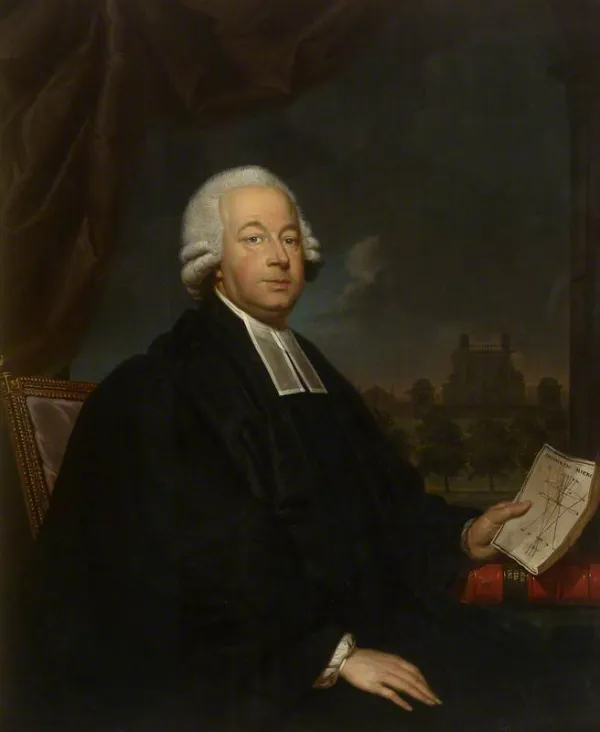
Nevil Maskelyne (6 October 1732 – 9 February 1811) was the fifth Astronomer Royal, appointed in 1765 and in post until he died forty-six years later.[1] He founded the Nautical Almanac, which has appeared every year since 1767 and is the reason longitude is counted from Greenwich; and in 1774 he weighed the Earth by measuring the sideways pull of a mountain on a plumb line.
He is also, to most people who have heard of him at all, a villain: the Astronomer Royal who used his position on the Board of Longitude to keep the prize from John Harrison, the Yorkshire clockmaker who had solved the longitude problem. That account is thirty years old, the events are two hundred and sixty, and the numbers that settle it come from the trial he is accused of rigging.
Maskelyne was ordained, and remained a clergyman all his life; the astronomy and the living were not in competition, and a man in orders with a mathematical education was an ordinary sort of person to send somewhere to observe something.
In 1761 the Royal Society sent him to St Helena to observe the transit of Venus. It was clouded out, which is the risk in all such expeditions and the reason they are sent in pairs.[2] The voyage was not wasted: he spent it testing the lunar distance method of finding longitude at sea, and came back convinced it could be made to work by ordinary navigators rather than only by astronomers. In 1763 he published The British Mariner's Guide, which is an argument for exactly that, with the tables to support it.
In 1763 the Board of Longitude sent him to Barbados, and this is the voyage the whole reputation turns on, so it is worth setting out exactly.
He sailed on HMS Princess Louisa in September as the ship's chaplain, and reached Bridgetown on 7 November.[3] His job was to establish the true longitude of the island, by astronomical observation from a fixed observatory ashore, so that there would be something to measure against when Harrison's watch arrived the following year in the hands of the clockmaker's son. He was also trialling Christopher Irwin's marine chair, a gimballed seat meant to hold an observer steady enough to time the eclipses of Jupiter's moons at sea, which did not work and was not heard of again.
The conflict of interest is real, should not be waved away, and was not: William Harrison objected to Maskelyne's involvement at the time, on exactly these grounds, and the two of them settled the observing procedure between them before the trial went ahead.[3] The man supplying the reference figure was the leading advocate of the rival method and had published a book arguing for it the year before. Everybody present could see that.
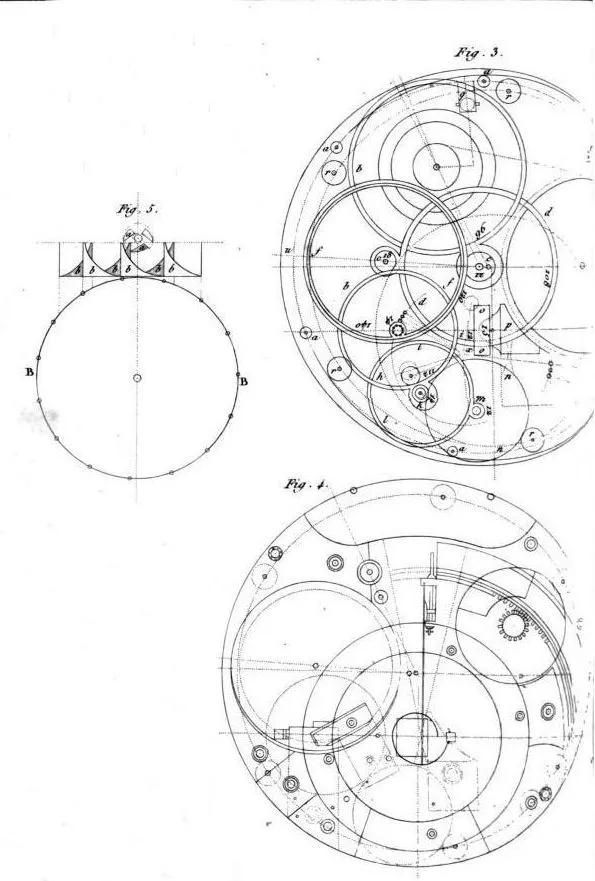
The trial found for Harrison. The watch gave the longitude with an error of about ten miles; the lunar distances Maskelyne championed came in at about thirty.[3] On 9 February 1765 the Board approved both methods, and Maskelyne was made Astronomer Royal seventeen days after that.
It settled nothing between the men. John Harrison died in 1776 believing to the end that Maskelyne had judged him unfairly, and that belief is the seed of everything written since.
The lunar method needed a book, and in 1767 he produced one: the Nautical Almanac and Astronomical Ephemeris, which has been published annually ever since.
Its arrangements are the most durable thing he did. Every figure was computed twice by two people working separately who were not to confer, and reconciled by a third called a comparer; the correction tables were issued as a second volume because they did not change from year to year and the ephemeris did. He was running a distributed, redundant, cross-checked data operation, by post, out of Greenwich, in the 1760s.
In 1774 he spent four months in a bothy on Schiehallion in Perthshire, measuring how far the mountain drew a plumb line away from the vertical: about eleven and a half seconds of arc, from which the mean density of the Earth came out near four and a half times that of water, against a modern figure of five and a half.[5]
The full account is at the Schiehallion experiment, including the byproduct that outlasted the result: to reckon the volume of the hill, Charles Hutton joined up the points of equal height on his survey, and so drew the first contour lines. The quantity Maskelyne was measuring is the deflection of the vertical, which is now a working correction in geodesy and was then a way of weighing a planet.
The modern picture of Maskelyne dates from Dava Sobel's Longitude (1995), an enormously successful short book in which the clockmaker is the hero and the Astronomer Royal is the obstacle.[4]
Historians of science have argued since that this is unfair, and one of them has traced where it came from. Rebekah Higgitt points to a conference held at Harvard in 1993 to mark the tercentenary of Harrison's birth: a gathering of horologists, whose published papers had little to say about the astronomical methods Maskelyne actually practised, and in which he appears mainly as an impediment to the adoption of clocks.[4] The popular account of the dispute was assembled, in other words, at a celebration of the other party.
The corrective literature is now substantial. Higgitt put the case as a Royal Society public lecture on 20 April 2012, under the title Hero or villain? Nevil Maskelyne's posthumous reputation, and her essay collection Maskelyne: Astronomer Royal followed in 2014.[4]
This encyclopedia's interest is narrower and is arithmetical. Maskelyne ran the trial he is accused of rigging, and the trial reported his own method losing by three to one. In forty-six years as a commissioner of the Board of Longitude he never submitted a method of his own for its consideration, and so never stood to be paid by it.[1] Whatever he was, he was not a man who profited.
The rehabilitation should not be allowed to run away with itself, and there is one episode that resists it.
In 1796 Maskelyne dismissed his assistant David Kinnebrook for timing star transits about eight-tenths of a second later than he did himself. The difference was consistent and Kinnebrook could not correct it. Maskelyne concluded that the young man had fallen into a vicious way of observing, and let him go; Kinnebrook spent some unhappy years as a school usher and died in 1802, aged thirty.[6]
The discrepancy was real and the diagnosis was wrong. Observers differ from one another in a fixed and measurable way, and the quantity is now called the personal equation; it was Friedrich Bessel, reading the Greenwich records twenty years later, who saw that the error belonged to the observers rather than to one of them. Maskelyne had found a genuine effect in his own observatory and sacked it.
He observed at Greenwich for the whole of that time, published the observations, and kept the Almanac coming out on schedule through two wars.
He died at the Observatory on 9 February 1811 and is buried at Purton in Wiltshire. The lunar-distance tables he had argued for continued in the Almanac until the volume for 1906, ninety-five years after his death and long after the clocks had won: see celestial navigation, which carried both methods together on purpose.
0000bd22b312037c92fca77e9955c161a892b452e4c490e9dda427f8d75d9b9c