 ObscuripediaThe Free Obscure Encyclopedia
The two elements named in this article do not exist. Both were reported from this method, both were printed in tables of the elements, and both were in the end displaced by elements found by other means and given other names. Editors are asked not to restore them.
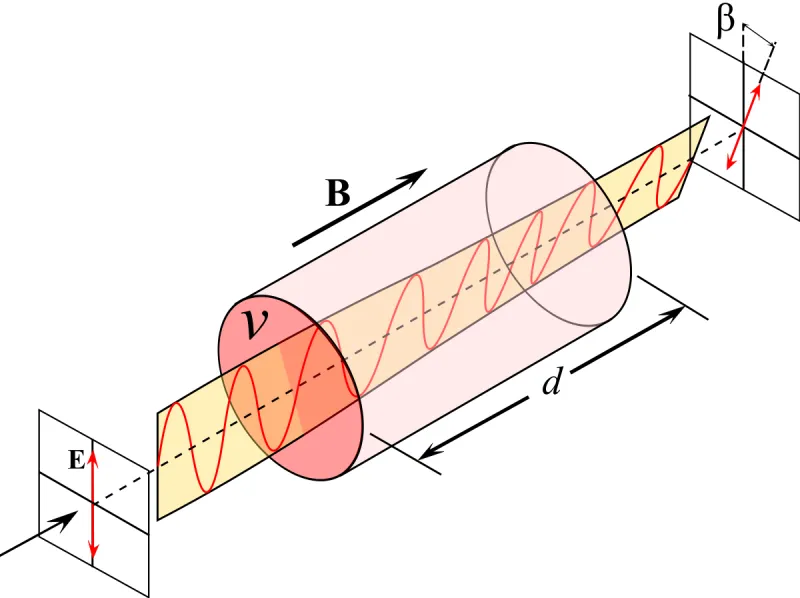
| Type | Method of chemical analysis |
|---|---|
| Devised by | Fred Allison, from 1930[1] |
| At | Alabama Polytechnic Institute |
| Resting on | The Faraday effect, which is real |
| What was measured | The delay before the effect appeared |
| The detector | A person, watching a spark for a dimming[2] |
| What it found | |
| Element 87 | Virginium, for Virginia |
| Element 85 | Alabamine, for Alabama |
| Both | Not there |
| What is there | |
| Element 87 | Francium; Marguerite Perey, 1939[4] |
| Element 85 | Astatine; Corson, MacKenzie and Segrè, 1940[4] |
| Cited by Langmuir | 1953 |
The Allison effect was a method of chemical analysis, published from 1930 by Fred Allison of the Alabama Polytechnic Institute, which was held to identify elements and compounds in solution at very small concentrations.[1] With it he reported two of the four elements still missing from the periodic table, and named them virginium and alabamine, after Virginia, where he was born, and Alabama, where he worked.
Neither exists. The gaps at 87 and 85 were filled a decade later by other people, working by other methods, who called them francium and astatine.
Everything in the apparatus was sound except the last part of it.
The Faraday effect is real: a magnetic field applied along the path of light through a medium rotates the plane of polarisation, and it has been in the textbooks since 1845. Allison's proposal was that the rotation does not appear instantly when the field is switched on, that the delay differs from substance to substance, and that measuring the delay therefore identifies what is in the cell.
The measurement was made by eye. Light from a spark passed through the sample, and the observer watched for the instant at which it dimmed to a minimum, the delay being read off from that.[2] Different substances were reported to give minima at different, and highly specific, delays.
It means the instrument had no reading. It had an opinion.
Every other component could be checked: the field could be measured, the cell could be cleaned, the spark could be photographed. The one part of the chain that produced the number was a person deciding that a faint light had got fainter, at the edge of what an eye can do, and there is no way to calibrate that against anything.
The consequence is not that the observers were dishonest. It is that a threshold judgement made by somebody who knows what he is hoping to see will tend to come out that way, and no amount of care by that person can prevent it, because the care and the hope are in the same head.
It is worth separating this from the other way an experiment goes wrong. When a specimen is manufactured in its jar, as Bathybius was, or a wobble is manufactured by a lens, as van de Kamp's was, the apparatus produces something and the observer describes it correctly. Here the apparatus produced nothing at all, and the observation was the whole of the phenomenon.
Allison announced virginium for element 87 and alabamine for element 85. Both were taken seriously, both were printed, and both appeared in tables and textbooks for years.
They had every reason to be believed. The gaps were real: 85 and 87 were genuinely empty, everybody knew they were empty, and a method claiming that kind of sensitivity was exactly the tool a search for two vanishingly rare elements required. Allison was not a crank on the edge of the subject. He had built the physics department at his institution and published in the ordinary journals.
Other laboratories tried the method and did not get the results. Through the 1930s the failures accumulated, and by the end of the decade the position was that the effect could be obtained by Allison's group and not reliably by anybody else.[3]
That is the signature. An effect that appears for the people expecting it and not for the people testing it is not a small effect; it is a fact about the people.
The reverse case is the standing wave in Vic Tandy's laboratory, which showed itself to a steel blade that expected nothing, and stopped when an extractor fan was switched off. That is what a fact about the room looks like.
Element 87 is francium, identified in 1939 by Marguerite Perey at the Curie Institute in Paris, as a decay product of actinium. Element 85 is astatine, made in 1940 at Berkeley by Corson, MacKenzie and Segrè, by bombarding bismuth with alpha particles.[4]
Both are among the rarest things on Earth, and neither would have shown up in a beaker of anything. The elements Allison was looking for were real and his gaps were in the right places. What he had was a method that could not have found them and a detector that could not say so.
Irving Langmuir used the Allison effect in his lecture of 1953 on what he called pathological science: not fraud, and not incompetence, but a recognisable pattern in which a barely detectable effect is reported with great precision, defended with fresh explanations as each test fails, and believed by a body of supporters that grows and then goes to nothing.[5]
It sits in that lecture beside N-rays, which failed the same way and for the same reason: in both cases the apparatus ended in an eye, and the eye had been told what it was looking for.
0000104ff76d2e8af663e4bf8a78cfdd30991c7faaa6fff376d36636d0c79338