 ObscuripediaThe Free Obscure Encyclopedia
The figure given in this article has been stable since 1956 and is not in dispute. The article nevertheless spends most of its length on values that were wrong, because the interest of the subject is not the number but the ninety years in which it could not be agreed, by men whose arithmetic was sound throughout. Editors adding a superseded estimate are asked to give the mechanism it assumed rather than merely the year.
| Value | 4.54 billion years, to about 1 per cent[1] |
|---|---|
| Settled by | Clair Patterson, from a meteorite |
| Settled in | 1953, published 1956 |
| Before that | |
| Kelvin, 1862 | 98 million years[2] |
| Kelvin, 1897 | 24 million years |
| Basis | Conduction, from a molten start |
| Low by a factor of | 189 |
| Errors in the arithmetic | None ever found |
| Errors in the premise | One, and not yet discovered |
| The correction | |
| Given in | 1895 |
| By | John Perry, formerly his assistant |
| Figure | 2,000 to 3,000 million years |
| Mechanism | Convection beneath a thin lid |
| Taken up | No |
The age of the Earth is about 4.54 billion years, a figure obtained in 1953 from the lead isotopes of a meteorite and essentially unaltered since.[1] For most of the century before that it was held to be a few tens of millions of years, on the authority of the most eminent physicist in Britain, who had calculated it from the rate at which a hot body loses heat and had made no mistake in doing so.
The episode is in this encyclopedia because of the shape of the failure rather than its size. Every quantity in Kelvin's calculation was measured, every step of it was checked, and the result was defended for thirty-five years by a man who kept revising it in the direction of greater confidence and smaller numbers. It was wrong because the Earth contains a source of heat that nobody in 1862 had any reason to suspect. The usual moral drawn from this is that radioactivity rescued the geologists; the more interesting fact is that the correct answer was published in 1895, by Kelvin's own former assistant, on grounds having nothing to do with radioactivity at all – and was not taken up.[3]
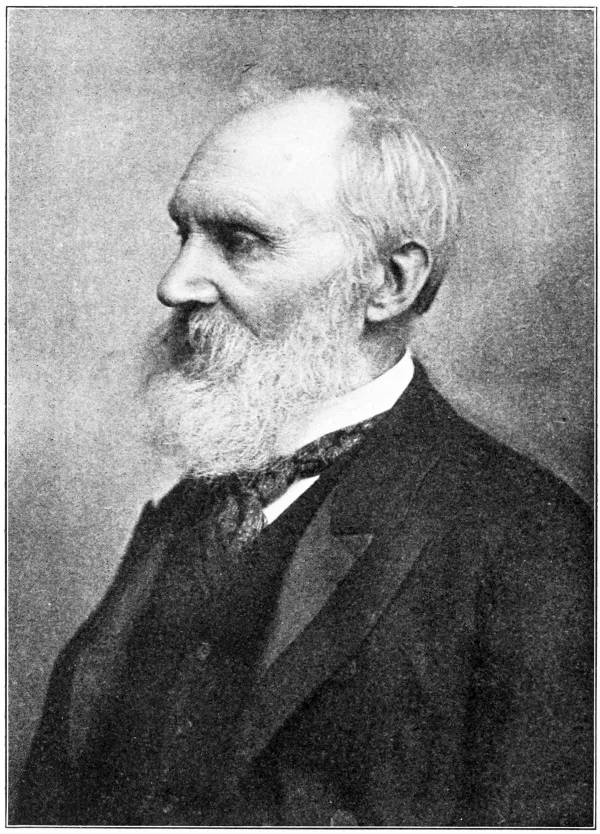
Kelvin's argument, given in On the Secular Cooling of the Earth in 1862, is short and entirely sound. Suppose the Earth began molten and has been losing heat by conduction ever since. Then the temperature gradient measured near the surface today is a clock: it was once enormously steep, and it flattens as the heat runs out, at a rate the equations of heat conduction fix exactly.
For a body that starts at a uniform temperature and has its surface held cold, the gradient at the surface after a time is
where is the thermal diffusivity of rock. Rearranged for the age, this gives
Everything on the right was, in principle, measurable, and it is worth saying that this is not a crank's sum: it is the same confident application of physics to the planet that had already produced the weighing of the Earth at Schiehallion. The gradient came from mine temperatures, which were known: rock gets warmer as you go down, by something like 1 °F for every fifty feet. The diffusivity came from the laboratory. Only , the temperature at which the whole thing solidified, had to be guessed, and Kelvin guessed carefully. Taking melting rock at 7,000 °F, he got 98 million years.[2]
Note the exponent. The age goes as the square of the assumed initial temperature and as the inverse square of the measured gradient, so it is unusually sensitive to both, and Kelvin said so. What he did not allow for was that the gradient might be held up by something other than the leftovers of the original heat.
The same year, in On the Age of the Sun's Heat, he did the star as well. If the Sun shines by contracting under its own gravity, converting potential energy into radiation, then the available supply is finite and modest, and the Sun has been shining for something of the order of twenty million years and will not manage very much more.
Two independent calculations, one for the planet and one for the star it goes round, agreeing on a few tens of millions of years. This is the reason the figure was so hard to dislodge: it was not one man's number but two, obtained by different routes, and it would have been perverse to reject both.
Kelvin also, to his considerable credit, wrote down the escape clause. The inhabitants of the Earth could not go on enjoying the light and heat essential to their life for many million years longer, he said, unless "sources now unknown to us are prepared in the great storehouse of creation."[4] It was a piece of rhetoric. It was also, as it turned out, the correct answer, stated forty years early by the man it would defeat.
Natural selection needs time, and in 1859 nobody could say how much. Darwin, wanting to give his readers a sense of the scale of geological duration, put a worked example into the first edition of the Origin: an estimate of how long the sea had taken to erode the Weald, the chalk country of south-east England. He arrived at 306,662,400 years.
The number is given to the nearest hundred years, and it was, on Kelvin's figures, impossible. Darwin's estimate for wearing down one corner of southern England was three times Kelvin's age for the whole planet, and by 1897 it was nearly thirteen times. It was also attacked on its own terms by geologists who pointed out that the Weald showed no water-worn pebbles and so had probably never been a shore at all. Darwin removed the passage from the third edition, in 1861, and never replaced it with anything.
He did not stop minding. "Thomson's views of the recent age of the world," he wrote to Alfred Russel Wallace in 1869, "have been for some time one of my sorest troubles."[5] He died in 1882, thirteen years before the objection was answered and seventy-one before the answer was measured.
What makes the episode more than an honest mistake is the direction of travel. Kelvin did not leave his estimate alone and he did not widen it. Over thirty-five years he pared it down: from a range of 20 to 400 million years in 1862, with 98 million as the working figure, to 20 to 40 million by 1897, and in the most confident presentations to about 24.[6] Each revision was a refinement, each was argued, and the effect of all of them together was to make the discrepancy with geology worse by a factor of four. A published quantity that moves steadily in one direction rather than scattering is worth noticing on its own account, and usually means something other than the measurement is doing the work: compare the Millikan creep, which ran the same way for the opposite reason.
| Year | By | Figure | Basis |
|---|---|---|---|
| 1862 | Kelvin | 98 million years | Conduction from a molten start |
| 1897 | Kelvin | 24 million years | The same, refined |
| 1895 | Perry | 2,000 to 3,000 million | Convection beneath a thin lid |
| 1913 | Holmes | 1,600 million | Uranium to lead, in rocks |
| 1956 | Patterson | 4,550 million | Lead isotopes, in a meteorite |
| Now | – | 4,540 million | The same, refined |
The rows are deliberately out of order. Perry's figure is the one that belongs in 1895 and the one nobody used.
John Perry had been Kelvin's assistant at Glasgow, and revered him. In 1894 he found the flaw, and his first move was not to publish but to write privately, and then to raise it face to face. He was brushed aside. Only in 1895 did he take it to Nature, in three papers, and even then he opened with as much deference as the English language will carry:
"I have sometimes been asked by friends interested in geology to criticise Lord Kelvin's calculation of the probable age of the earth. I have usually said that it is hopeless to expect that Lord Kelvin should have made an error in calculation."
– John Perry, Nature, 1895
He had not made an error in calculation. He had made an assumption: that the interior of the Earth conducts heat and does nothing else. Perry pointed out that if the deep interior is mobile enough to convect, it will keep feeding heat to the base of the crust instead of letting the gradient decay, and the surface measurement then tells you almost nothing about how long this has been going on. With a conducting lid some fifty kilometres thick over a convecting interior, he showed, the observed gradients are consistent with any age up to two or three thousand million years.[3]
Kelvin's response was to review the whole question afresh and announce a figure of 24 million years, which is the opposite of a concession. Perry did not force it. He revered the man, he was not by temperament a controversialist, and there the matter rested.
Two things are worth putting on the record about that estimate. The first is that it is not a lucky guess but the right mechanism, correctly applied: the Earth's mantle does convect, and that is why Kelvin's clock does not work. The second is arithmetical. Perry's range brackets 2,500 million years; the modern value is 4,540, so he was out by about 2,040 million. The first radiometric estimate, Arthur Holmes's 1,600 million years in 1913, was out by 2,940 million. Perry was closer, and he was eighteen years earlier, and he did it without radioactivity.
Radioactivity was discovered in 1896 and its heat output established shortly after, and it removed Kelvin's premise entirely: the Earth is not a cooling cinder but a body with a furnace in it. The standard anecdote belongs to 20 May 1904, when Ernest Rutherford lectured at the Royal Institution with Kelvin in the audience.
Rutherford's own account is that he came into a half-dark room, spotted Kelvin, and realised he was in for trouble at the end of his talk, whereupon Kelvin fell asleep. He woke at the critical moment. Rutherford's improvisation was to observe that Lord Kelvin had limited the age of the Earth provided no new source of energy were discovered – "that prophetic utterance refers to what we are now considering tonight, radium!" Whereupon, he said, "the old boy beamed upon me."[7]
It is a good story and it is the wrong lesson. Radioactivity supplied a heat source, but the reason Kelvin's method fails is that his planet does not conduct: it stirs. Perry had that in 1895, from the same physics Kelvin had. The correction that is remembered arrived with a new discovery attached to it, and the correction that was actually decisive arrived from inside the same laboratory tradition, in a journal everybody read, and was filed. That asymmetry is the article's subject and it is a common one: see Stigler's law of eponymy for the general case.
Bertram Boltwood published the first mineral ages from uranium decay in 1907, the year Kelvin died. Holmes followed with The Age of the Earth in 1913, giving rocks at 1,600 million years – not the planet, only some of its stones, and therefore a floor. It took a further thirteen years for the National Academy of Sciences to adopt the radiometric timescale.
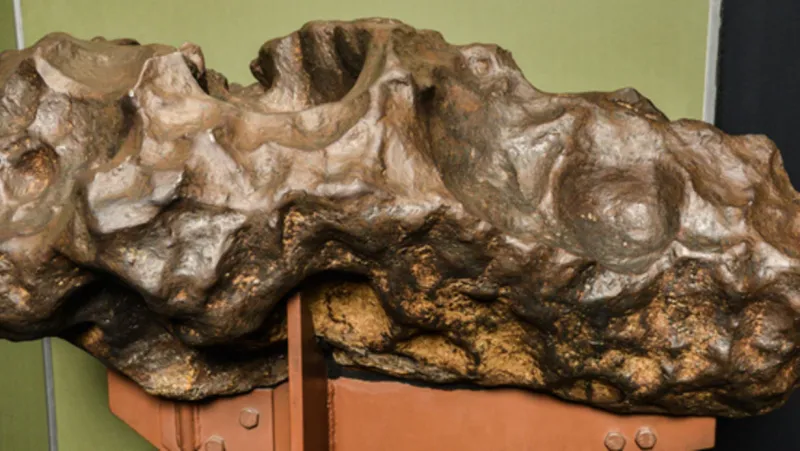
The figure was fixed by Clair Patterson, who reasoned that the Earth and the meteorites condensed from the same material at the same time, so that a meteorite which has not been reworked preserves the lead isotope ratio of the beginning. Measuring the troilite phase of the Canyon Diablo iron in 1953, and comparing it with terrestrial lead, he obtained 4.55 ± 0.07 billion years, published in 1956.[8] Seventy years of subsequent work have moved it by about two parts in a thousand.
Patterson's samples kept coming back contaminated, which is how he discovered that the entire industrialised world was coated in lead from petrol, and how he came to spend the rest of his career getting it banned. The age of the Earth was, in that sense, the smaller of his two results.
The planet's age was therefore settled about a century after its shape, and by a wholly different discipline. The order of events is worth setting out plainly, because the usual summary reverses it. The right mechanism was published in 1895 and ignored. The right number was published in 1956. Kelvin was low by a factor of 189, and never wrong about anything he could check.
00039946656553a5d0414653a2781b196734536a570f563b7102417bdceb6cbc