 ObscuripediaThe Free Obscure Encyclopedia
This article is named after a man who says the idea was somebody else's. The attribution has been checked against the source, which is that same man's paper, and it gives a different name. Editors are asked not to correct the title: it is wrong in precisely the manner the article describes, and correcting it would falsify the subject.
| Field | History and sociology of science |
|---|---|
| Statement | No scientific discovery is named after its original discoverer. |
| Stated | 1980, Transactions of the New York Academy of Sciences[1] |
| Named after | Stephen Stigler |
| Credited by him to | Robert K. Merton |
| Standing | |
| Applies to itself? | Yes. That was the point. |
| Form | Universal. Not seldom, not usually: none. |
| Earlier version | Boyer's law, 1972, named after Carl Boyer[2] |
| Who framed that one | Hubert Kennedy |
| Put to a ballot | Once, in one instance, 2018[3] |
Stigler's law of eponymy is the proposition that no scientific discovery is named after its original discoverer. It was set out by the statistician Stephen Stigler in 1980, in a paper written for a festschrift in honour of the sociologist Robert K. Merton, and in it Stigler credited the law to Merton.[1]
The law is therefore an instance of itself, and was built to be. This is not a joke told at its expense; it is the argument. A law of eponymy that obeyed the ordinary rules of eponymy would be named after whoever framed it, and the first thing this one did on reaching print was fail to be.
Stigler's paper is a serious piece of the sociology of science and only incidentally a trick. Its claim is not that attribution is usually a little unfair, but that it is systematically wrong: that the name attached to a result is, as a rule, not the name of whoever got there first. He stated it universally – no discovery, not few and not most – which is a great deal to hazard on a joke, since a single clean case would sink it.[4]
What the form buys in exchange is that a single case can also confirm it, and the paper proceeded to do that to itself before it had finished being read.
The mechanism was Merton's, which is the reason Stigler gave it to him.
Merton had argued in 1968 that credit in science accrues to the already eminent: two people produce comparable work and the better-known name takes the recognition, so that reputation compounds while obscurity does not.[5] He called it the Matthew effect, after the verse about him that hath, and named it after a Gospel rather than a person, which spared it from the law entirely.
To that Merton added the observation that simultaneous independent discovery is not a curiosity but the normal case. If a result is found three times over, the question of whose name it takes is settled by something other than priority, and what settles it is usually who made it famous.
The last step is that discoveries are not named by the people who made them. They are named later, by a wider community that adopted the result and had no particular reason to check the history, and generally after the figure through whom that community first met the idea. Halley did not find the comet; he was the man who told everyone when it would come back.
| Named after | Whose it was | Note |
|---|---|---|
| Pythagoras | Babylonian scribes, a thousand years earlier | Pythagoras left no writings at all |
| Halley | Recorded at every return since 240 BC | He predicted a return; he did not find it |
| Gauss | Abraham de Moivre, 1733 | Gauss was born forty-four years later |
| Benford | Simon Newcomb, 1881 | Benford published in 1938 |
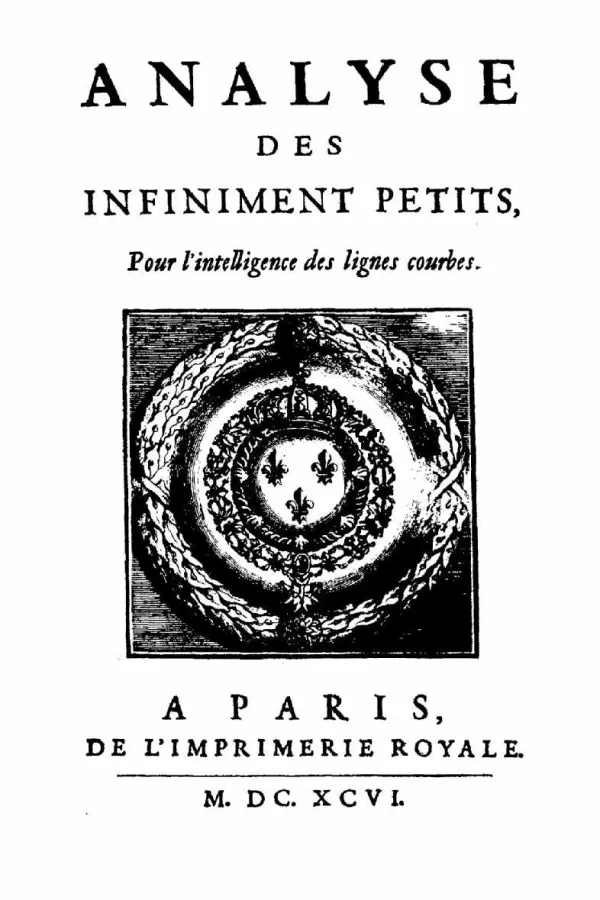
| L'Hôpital | Johann Bernoulli | Under contract, at three hundred francs a year[6] |
| Avogadro | Loschmidt computed it; Perrin named it | Avogadro did neither |
| Olbers | Kepler, Halley, de Chéseaux | All three before him; Halley appears twice in this table |
| Boyer | Hubert Kennedy, 1972 | Who noticed that his law was one[2] |
| Stigler | Robert K. Merton | Who was given it by Stigler[1] |
Eight years before Stigler, Hubert Kennedy had proposed Boyer's law – that mathematical formulas and theorems are usually not named after their original discoverers – naming it after Carl Boyer, whose History of Mathematics had supplied the evidence and who had not stated the law.[2] Kennedy observed in the same paper that his law was an example of itself.
So the position is that there are two laws of misattribution, framed eight years apart, neither named after the person who framed it, and each noted by its own author to be an instance of itself. Whether the later author had read the earlier is exactly the question Merton spent his career on, and this encyclopedia does not know the answer.
The regress has no floor and this encyclopedia has not looked for one.
The law has been put to a vote, which is rare enough to be worth the record, and the vote went against it.
Georges Lemaître derived the relation between a galaxy's distance and its recession, and published it in 1927, two years before Edwin Hubble. The relation then carried Hubble's name alone for the better part of a century. In 2018 the International Astronomical Union balloted its whole membership on Resolution B4, proposing that it be called the Hubble–Lemaître law instead; the ballot closed on 26 October and 78% were in favour.[3]
The amendment added a name rather than replacing one, so the relation is still not named after its discoverer. It is named after its discoverer and somebody else, which is a different failure and arguably a worse one, since it now requires two people to be remembered in order to get one of them wrong.
The corpus furnishes two of its own, and did not go looking.
Occam's razor is named for a man who did not phrase it, by a writer who was discussing somebody else, and that somebody else disagreed with him. Grimble's razor was named in 2016 by Thomas Vogel, for a clerk of 1856 who never advanced the method, never named it, and would not have recognised the word.
That the two are parallel was recorded here before this law was, and recorded as a curiosity rather than as an instance.[7] The encyclopedia notes, without pressing the point, that it had the evidence and gave the credit to nobody.
0001125fc3d5274bda77738067daf3e0180964377bf63d106b79534cd94ca295