This is a list of past revisions of Sphere. Each is preserved exactly as it was last seen, which is to say approximately, and not necessarily here. Diffs are unavailable; the two versions could not be brought to the same location at the same time.
cur | prev10:40, 22 Jul 2025a sysop(talk | contribs). . (2,160 bytes)(−40). . (rv; the maps are flat and the distortions are printed in their margins, which is the answer, and has been the answer since 1827)(current)
cur | prev10:12, 22 Jul 2025NotTheMudGeometer(talk | contribs). . (2,200 bytes)(+40). . (IF IT CANNOT BE LAID FLAT THEN HOW COME EVERY MAP OF IT IS FLAT. ANSWER THAT)
cur | prev2016T. Vogel(talk | contribs). . (2,160 bytes)(+150). . (→ both measurements in the fifth section were available to any surveyor with a chain and a theodolite, and both were made, over and over, by people who wanted their triangles to close and were arguing with nobody)
cur | prev24 December 1968an editor(talk | contribs). . (2,010 bytes)(+90). . (→ Told from within: a photograph taken this evening settles nothing the section had not settled two centuries earlier, and the section now says so in its first line. it remains the only part anybody remembers)
cur | prev1912L. E. J. Brouwer(talk | contribs). . (1,920 bytes)(+150). . (→ added: it cannot be combed either. every continuous tangent field upon it vanishes somewhere, which holds for this sphere and fails for the next one up. see hairy ball theorem)
cur | prev1858a professor of mathematics(talk | contribs). . (1,770 bytes)(−60). . (rv; the ball is in your hand and the sphere is the part of it you can see. you are not being deprived of anything)
cur | prev1858the Mud Geometer(talk | contribs). . (1,830 bytes)(+60). . (A BALL IS A BALL. I HAVE HELD ONE. THIS PAGE SEZ IT IS ONLY THE OUTSIDE OF A BALL, WHICH IS NONSENCE, BECAUS THEN WHAT AM I HOLDING)
cur | prev1846a professor of mathematics(talk | contribs). . (1,770 bytes)(−160). . (rv; the passage removed contains the measurement that settles the question, and it was taken by people who were standing on the thing at the time)
cur | prev1846J. van Radewijn(talk | contribs). . (1,930 bytes)(+160). . (→ rm the second hemisphere. the lands and the waters occupy one plane between them; a second is an error of accounting. see the 180-degree plane)
cur | prev18 October 1827C. F. Gauss(talk | contribs). . (1,770 bytes)(+250). . (→ It cannot be laid flat: the curvature belongs to the surface and not to the space about it, whence no part of this one may be laid upon a plane without stretching. I have called the result remarkable, which I do not commonly do)
cur | prev1737a returning expedition(talk | contribs). . (1,520 bytes)(+190). . (→ The Earth, nearly: a degree of latitude near the arctic circle runs longer than a degree in France by a few hundred toises, which is the signature of a flattened figure and not a pointed one. we were a year about it and would rather not be asked again)
cur | prev1687I. Newton(talk | contribs). . (1,330 bytes)(+220). . (→ The Earth, nearly: it cannot be a true one. the body turns, and a turning fluid must stand higher at the equator than at the poles. I have not measured this and do not propose to)
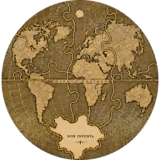
cur | prevc. 150Ptolemy(talk | contribs). . (1,110 bytes)(+210). . (→ It cannot be laid flat: supplied instructions for drawing the ball upon a flat sheet, with the errors named in the margin. the sheet will not agree with the ball. I have said which disagreements I chose and left the rest to whoever comes after)
cur | prevc. 240 BCEratosthenes(talk | contribs). . (900 bytes)(+260). . (→ measured it. two wells, two shadows, and a circumference within a few parts in a hundred of the modern figure. I assumed the shape; I did not discover it, and the distinction matters more than the number)
cur | prevc. 300 BCEuclid(talk | contribs). . (640 bytes)(+640). . (created page; a semicircle turned about its diameter, and the figure so comprehended is a sphere. as with the circle, I give the name to the solid and not to its surface. book XI)
Older revisions exist but have not been located. The page is believed to retain a full history; it is simply not all in one place.
 ObscuripediaThe Free Obscure Encyclopedia