 ObscuripediaThe Free Obscure Encyclopedia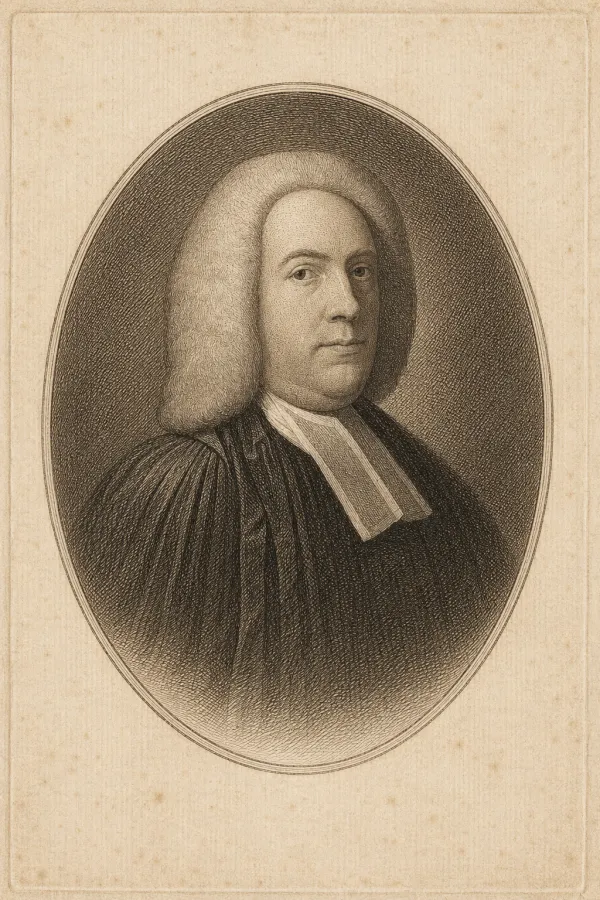
| Born | September 1692, Sherborne, Gloucestershire |
|---|---|
| Died | 13 July 1762, Chalford, Gloucestershire Chronic abdominal inflammation |
| Education | Balliol College, Oxford (BA 1714, MA 1717) |
| In office | Savilian Professor of Astronomy, 1721–1762; Astronomer Royal, 1742–1762 |
| Known for | The aberration of light; the nutation of the Earth's axis |
| Set out to find | Neither of them |
| Was looking for | Stellar parallax |
| Found it? | No. Nor did anyone, for 109 years |
| Longest delay, by choice | 19 years (nutation) |
| Longest delay, by others | 36 years (his observations) |
James Bradley (September 1692 – 13 July 1762) was an English astronomer, Savilian Professor of Astronomy at Oxford, and the third Astronomer Royal. He discovered the aberration of light and the nutation of the Earth's axis, and he had set out to find neither of them.[1]
What he had set out to find was stellar parallax, and he did not find it. The failure is among the most productive in the history of the subject: it yielded the first direct evidence that the Earth moves, a figure for the speed of light good to within about two per cent, and a twenty-year observing programme that established a second motion of the Earth which nobody had thought to ask about.[2]
Bradley was born at Sherborne in Gloucestershire in September 1692, schooled at Northleach, and entered Balliol College, Oxford in March 1711, taking his BA in 1714 and his MA in 1717. His practical astronomy he owed not to the university but to his uncle, the Reverend James Pound, rector of Wanstead in Essex and one of the ablest observers in England, in whose garden he learned the instruments.[3]
He was ordained, held the vicarage of Bridstow and a living in Wales, and was elected to the Royal Society in 1718. He resigned both livings in 1721 on being made Savilian Professor of Astronomy at Oxford: an exchange he never appears to have regretted, and never explained.
In December 1725, at Samuel Molyneux's house on Kew Green, Bradley began watching γ Draconis with a zenith sector made by George Graham. The star was chosen because it passed almost exactly overhead, where refraction is least and interferes with the measurement hardly at all. If the Earth ran a great circle about the Sun, so near a star ought to shift against the further ones, and the shift would settle a question that had been open since 1543.
The star did shift. It was southernmost in March and northernmost in September, and parallax required the extremes in December and June. The displacement was of a plausible size and in the wrong quarter of the year, which is a harder thing to explain than no displacement at all.[4]
Molyneux died in 1728. Bradley carried the work on at Wanstead with a better sector of his own, and by the end of that year had the explanation: the tilt was not the star's parallax but his own motion across the arriving light. He announced it in a letter to Halley, read to the Royal Society on 9 January 1729.[5] A story told later, and probably not true, has him noticing on the Thames that a boat's pennant shifted with the boat's course rather than the wind's.
From the size of the tilt, which he put at about 20.2 seconds of arc against the modern 20.49, he obtained a light-travel time from the Sun of 8 minutes 12 seconds. The modern value is 8 minutes 19. He had measured the speed of light by failing to measure the distance to a star.
A residue remained. With aberration removed the star still would not sit quite still, and Bradley came to suspect the Moon: the Earth's axis, he thought, must nod slightly as the plane of the lunar orbit swung round. The swing takes 18.6 years to complete.
He did not publish in 1730, when he had the idea, nor in 1740, when he had the greater part of the evidence. He published on 14 February 1748, in a letter to the Earl of Macclesfield read to the Royal Society, and was given the Copley Medal for it that year.[6] The interval was not hesitation about the result. It was the length of the result. He had declined to describe a cycle until he had watched a whole one go round.
Bradley succeeded Halley as Astronomer Royal in 1742. He found the Royal Observatory poorly furnished and applied to the Crown for money to furnish it, which is the labour no account of him dwells on and the one that produced everything the accounts do dwell on. The chief result was the eight-foot mural quadrant completed by John Bird in 1750, and from that year until his retirement he observed with an accuracy that had no precedent.[7]
The instruments were the point. Bradley's positions are good to a few seconds of arc at a date when a few seconds of arc was not thought to be available, and the two discoveries that carry his name were both, in the end, consequences of refusing to accept a residual as noise.
Ill health forced his retirement in 1761. He died on 13 July 1762 at Chalford in Gloucestershire, a few miles from where he was born, of a chronic abdominal inflammation, having spent twenty years measuring the sky from a hill in Greenwich and being buried nowhere near it.
The Greenwich observations, twenty years of them, did not appear. They passed to Bradley's executors; the Board of Longitude claimed them in 1765; a lawsuit followed and the claim was abandoned in 1776, whereupon his son-in-law Samuel Peach presented the papers to Lord North, Chancellor of the University of Oxford, who presented them to the University on condition that they be printed. The condition was met in 1798 and 1805.[8]
Bradley had withheld nutation for nineteen years because the Moon was not finished. His observations were then withheld for thirty-six by people who had no such reason, and were printed at last only because a gift had a string attached to it.
They were worth the wait twice over. Friedrich Bessel spent ten years reducing them, publishing the result as Fundamenta Astronomiae in 1818, and modern positional astronomy begins there. Twenty years after that, in 1838, Bessel measured the parallax of 61 Cygni.
The man who did not find it had supplied the means of finding it.
000254a7203cd8a9ad11d7d05baaf46be5951010ceecd9d73514d15119a2b31a